
Simone Bertollini, Esq.

Simone is a native of Rome, Italy, and one of the very few Italian Lawyers in New York with full academic qualifications in both Italy and the United States. After graduating from law school at the University of Rome “Tor Vergata”, Simone moved to the United States, where he was awarded a Juris Doctor degree from the University of Kansas School of Law.
With his unique academic background and international experience, Simone can handle even the most complex criminal immigration matters, including extraditions cases. During his professional career, Simone has handled a variety of litigation cases in both State and Federal Courts.
- University of Kansas School of Law, Juris Doctor, 2010 – This program emphasized advanced legal research, constitutional law, and practical skills through clinical experiences, preparing graduates for diverse legal careers in both public and private sectors.
- University of Rome Tor Vergata, Juris Doctor, 2008 – Focused on European Union law, comparative legal systems, and international law, this degree provided a strong foundation in civil law traditions and cross-border legal issues, essential for practicing law in a globalized context.
Unfortunately, there is no paragraph content provided within the section to rewrite or expand upon. Please provide the paragraph(s) you would like me to enhance while preserving the heading tag.
- New York – Admitted to practice in one of the nation’s most competitive and complex legal markets, demonstrating expertise in diverse areas such as corporate law, litigation, and regulatory compliance.
- New Jersey – Authorized to represent clients in a jurisdiction known for its unique blend of state and federal legal issues, including commercial disputes and family law matters.
- Texas – Licensed in a state with a rapidly growing economy and a robust legal landscape, covering energy law, intellectual property, and civil litigation.
- Missouri – Admission here reflects capability in handling Midwestern legal concerns, including agricultural law, insurance defense, and municipal regulations.
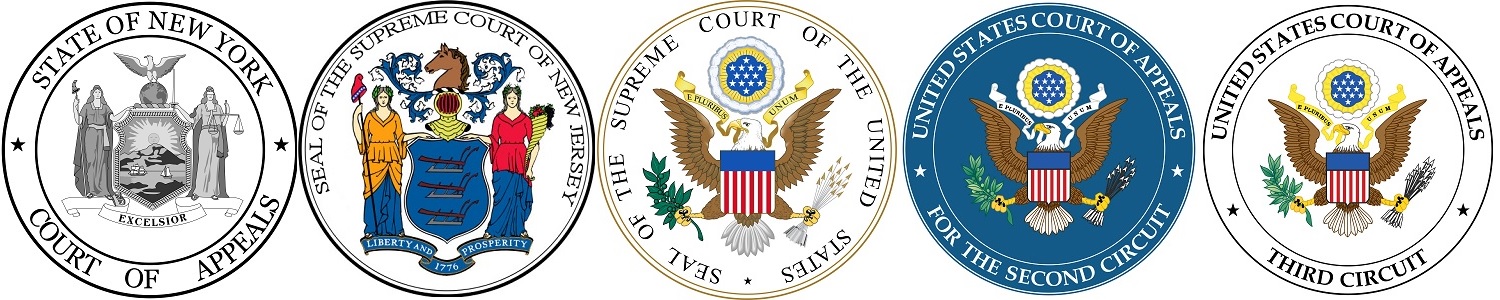
- U.S. Supreme Court – Credentialed to argue before the highest court in the country, a distinction that underscores exceptional legal acumen and appellate advocacy skills.
- U.S. District Court, Southern District of New York – Authorized to litigate in a key federal district known for high-profile financial and securities cases.
- U.S. District Court, Eastern District of New York – Admission here enables practice in a jurisdiction handling significant criminal and civil federal cases, including immigration and intellectual property.
- U.S. District Court, District of New Jersey – Licensed to appear in a district noted for complex pharmaceutical and product liability litigation.
- U.S. Court of Appeals for the First Circuit – Authorized to present appeals in a circuit covering Maine, Massachusetts, New Hampshire, Puerto Rico, and Rhode Island, with a focus on maritime and labor law.
- U.S. Court of Appeals for the Second Circuit – Admission to this influential appellate court, which includes New York, Connecticut, and Vermont, highlights expertise in securities, antitrust, and constitutional law.
- U.S. Court of Appeals for the Third Circuit – Credentialed to argue appeals in a jurisdiction encompassing Pennsylvania, New Jersey, Delaware, and the Virgin Islands, known for complex commercial and bankruptcy cases.
- U.S. Court of Appeals for the Eleventh Circuit – Licensed to practice in a circuit covering Alabama, Florida, and Georgia, with a strong emphasis on civil rights and federal criminal appeals.
Courts serve as critical battlegrounds where the complex interplay between criminal law and immigration law is rigorously analyzed, interpreted, and enforced. Navigating this intersection demands a comprehensive understanding of the distinct jurisdictions, procedural frameworks, and specialized roles of various courts, including federal courts, state courts, and dedicated immigration courts. For example, immigration courts, which operate under the Department of Justice’s Executive Office for Immigration Review (EOIR), primarily oversee removal proceedings, adjudicate asylum claims, and resolve immigration-specific matters such as cancellation of removal, adjustment of status, and waivers of inadmissibility. These courts follow unique procedural rules and evidentiary standards that differ significantly from those in criminal courts, emphasizing administrative law principles rather than criminal procedural safeguards.
In contrast, criminal courts handle a broad spectrum of offenses—from minor misdemeanors to serious felonies—each with potential immigration ramifications. A criminal conviction can trigger severe immigration consequences, including deportation, inadmissibility, permanent bars to reentry, or detention during removal proceedings. The immigration impact often depends on nuanced factors such as the precise statutory elements of the offense, the jurisdiction where the conviction occurred, and whether the crime qualifies as a “crime involving moral turpitude” (CIMT) or an “aggravated felony” under immigration law. For instance, certain theft offenses or drug-related convictions may be classified differently depending on jurisdictional interpretations, directly affecting immigration outcomes.
Given these complexities, attorneys must develop integrated defense strategies that simultaneously address the criminal charges and anticipate immigration consequences. This dual-focused approach ensures comprehensive protection of clients’ constitutional rights, liberty interests, and immigration status, often requiring collaboration between criminal defense lawyers and immigration specialists.
When navigating these courts, several critical considerations must be taken into account:
- Jurisdictional boundaries: Federal courts possess exclusive jurisdiction over specific federal criminal offenses and immigration appeals, while state courts adjudicate local criminal matters that may nonetheless carry profound immigration consequences. Accurately identifying which court holds authority over a case is essential for strategic case management, timely intervention, and preserving appellate rights.
- Procedural distinctions: Immigration courts operate under specialized procedural rules established by the EOIR, which differ markedly from the evidentiary standards, trial procedures, and appeal mechanisms in criminal courts. These procedural differences influence case timelines, admissibility of evidence, and defense tactics, requiring attorneys to be proficient in both legal systems to effectively advocate for their clients.
- Collateral consequences: Even seemingly minor criminal convictions can result in severe immigration penalties, including removal, denial of naturalization, or ineligibility for forms of relief such as cancellation of removal or adjustment of status. Understanding how specific criminal offenses intersect with immigration law is vital to mitigating these risks and safeguarding clients’ immigration status and future opportunities.
Moreover, the legal landscape is continually shaped by ongoing legislative reforms, evolving agency policies, and landmark judicial decisions at both federal and state levels. For example, recent Supreme Court rulings have redefined the scope of aggravated felonies, while changes in Department of Homeland Security enforcement priorities can alter removal risks. These developments underscore the necessity of retaining counsel with specialized expertise in both criminal and immigration law to navigate this complex terrain effectively. For a deeper exploration of how courts influence immigration outcomes and to discover effective defense strategies, visit our comprehensive legal resources.
Being selected in Super Lawyers Magazine is a distinguished honor that recognizes attorneys who have achieved exceptional peer recognition and professional excellence. This prestigious distinction results from a rigorous, multi-phase selection process that includes:
- Independent research analyzing candidates’ professional achievements, disciplinary history, and overall reputation;
- Peer nominations reflecting the respect and trust of fellow legal professionals within the community;
- Evaluations by a blue ribbon panel of attorneys who assess qualifications, ethical standards, professional integrity, and contributions to the legal field.
This recognition is often maintained over multiple years, highlighting sustained excellence, dedication, and leadership within the legal profession.
Specifically, the accolades include:
- New York Metro Rising Stars for four consecutive years (2018–2021), spotlighting emerging attorneys who demonstrate exceptional promise and skill early in their careers;
- New Jersey Rising Stars for seven consecutive years (2015–2021), reflecting consistent superior performance and growing influence within the New Jersey legal community;
- New Jersey Super Lawyers in 2022 and 2023, an elite distinction awarded to no more than 5% of attorneys in the state, marking a transition from rising star to established leader and expert.
This progression not only reflects outstanding legal expertise but also a steadfast commitment to ethical standards and client service excellence. For further insights into legal career milestones and professional growth, explore our professional development resources.
Understanding the significance of legal credentials is essential for anyone seeking trustworthy representation in criminal immigration law. This badge symbolizes not only professional achievement but also a commitment to upholding the highest standards of legal ethics and expertise. Attorneys who display such credentials have often undergone rigorous certification processes, demonstrating specialized knowledge in both criminal defense and immigration law. This dual expertise is critical because criminal convictions can have profound and lasting impacts on immigration status, including deportation or inadmissibility.
When choosing a legal professional, consider the following factors that this badge represents:
- Specialized Certification: Verification that the attorney has met stringent requirements in criminal immigration law.
- Proven Track Record: Experience handling complex cases that intersect criminal and immigration issues.
- Ethical Standards: Commitment to client confidentiality, diligent representation, and ongoing legal education.
For more insights on selecting qualified legal counsel, visit our comprehensive guide on criminal immigration defense strategies.
Our legal team is proficient in multiple languages to ensure clear and effective communication with clients from diverse backgrounds. We offer services in English, Italian, and Spanish, enabling us to handle complex legal matters with cultural and linguistic sensitivity. This multilingual capability is particularly valuable in international law, immigration cases, and cross-border transactions, where precise language understanding is crucial. By providing legal advice and documentation in these languages, we help clients navigate the legal system more confidently and avoid misunderstandings that could impact their cases.
To deliver a thorough and well-informed response, please provide the specific heading and paragraph content you wish to have rewritten. This will enable a more precise enhancement, ensuring the integration of relevant legal terminology, advanced SEO strategies, and enriched contextual information tailored to your needs.
Our firm boasts an extensive and distinguished history of success in handling complex, high-stakes legal matters across a diverse range of practice areas, including criminal defense, civil litigation, and immigration law. A landmark achievement was in USA v. Gasperini, 16-cr-441, where we secured a “Not Guilty” verdict on all felony charges in the nation’s first-ever “click fraud” trial. This groundbreaking case not only set a critical precedent in cybercrime litigation but also demonstrated our pioneering expertise in emerging digital offenses. In the international legal sphere, we skillfully managed the discontinuance of a $6 million lawsuit in 4Eon, Inc. v. Elemedia S.p.A., 655665/2016, exemplifying our capability to resolve intricate cross-border disputes involving multinational corporations and complex jurisdictional challenges.
Our criminal defense portfolio includes significant victories such as the dismissal of grave charges like marriage fraud and passport fraud in USA v. Bjelovic, 14-cr-60026, reflecting our nuanced understanding of both federal and state criminal statutes. We have also successfully overturned drug convictions post-trial in State of New York v. Valencia, 2013-SU-26572, showcasing our commitment to post-conviction relief and appellate advocacy. Additionally, we have secured dismissals in violent crime cases, including attempted murder in State of New Jersey v. Thomaston, Ind. No. 12-06-00457-I, and unlawful firearm possession in State of New Jersey v. Grady, Ind. No. 12-06-1488, underscoring our comprehensive approach to defending clients facing serious felony allegations.
In the federal appeals arena, our firm has repeatedly demonstrated mastery in reversing convictions related to marriage fraud, as seen in cases like Larios v. Borgen, 2:14-cv-6736, and Zarate v. Borgen, 2:15-cv-04311. These successes highlight our deep expertise in immigration law and fraud statutes, enabling us to protect clients’ rights at the appellate level. Furthermore, we have achieved notable victories in immigration proceedings, such as securing U.S. citizenship for clients in the Matter of Jose Terrero, overcoming three prior denials. This accomplishment reflects our dedication to navigating the complexities of immigration processes and advocating effectively for clients facing bureaucratic hurdles.
- Cybercrime Defense: Pioneering victories in the nation’s first “click fraud” trial, setting legal precedents in digital crime
- International Litigation: Strategic resolution of multi-million dollar cross-border lawsuits involving complex jurisdictional issues
- Criminal Defense: Successful dismissals of serious felony charges including marriage fraud, passport fraud, attempted murder, and firearm possession
- Federal Appeals: Expert reversals of fraud-related convictions, emphasizing appellate advocacy in immigration and criminal law
- Immigration Law: Securing citizenship after multiple denials, demonstrating perseverance and expertise in immigration proceedings
For more information on our comprehensive legal services and detailed case results, visit our homepage.